This post may contain affiliate links. As an amazon associate, I earn from qualifying purchases. See my full Disclosure Policy for details.

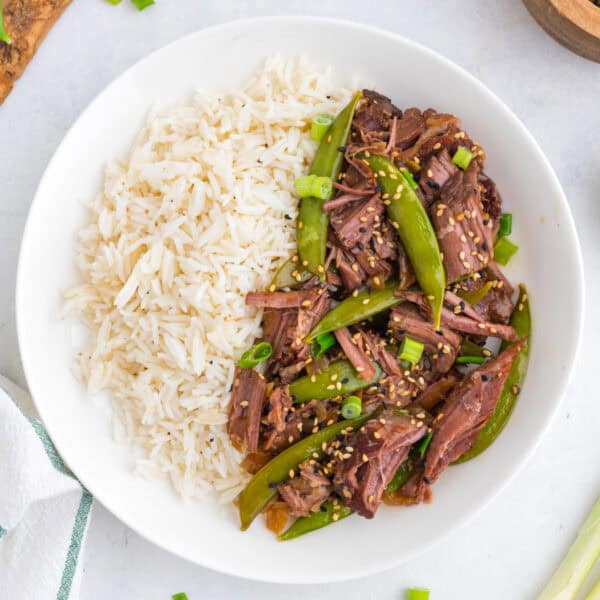
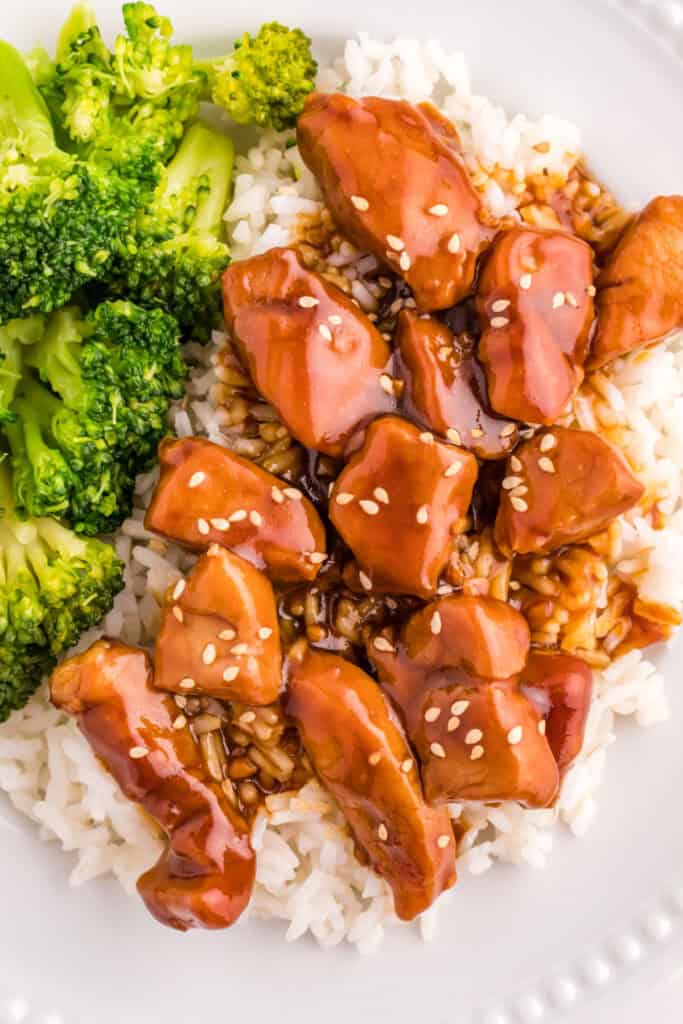
This easy Mongolian Pork recipe is packed with tender slices of pork coated in a rich, sweet and savory sauce made with soy sauce, hoisin, garlic, and fresh ginger. It tastes like your favorite takeout, but it’s easy enough to make at home in under an hour. Serve it over steamed rice or noodles for a restaurant-quality dinner the whole family will love.
Want to see more Love Bakes Good Cakes recipes on Google?
Table of Contents
- ❤️ Why You’ll Love This Recipe
- What Is Mongolian Pork?
- Why This Recipe Works
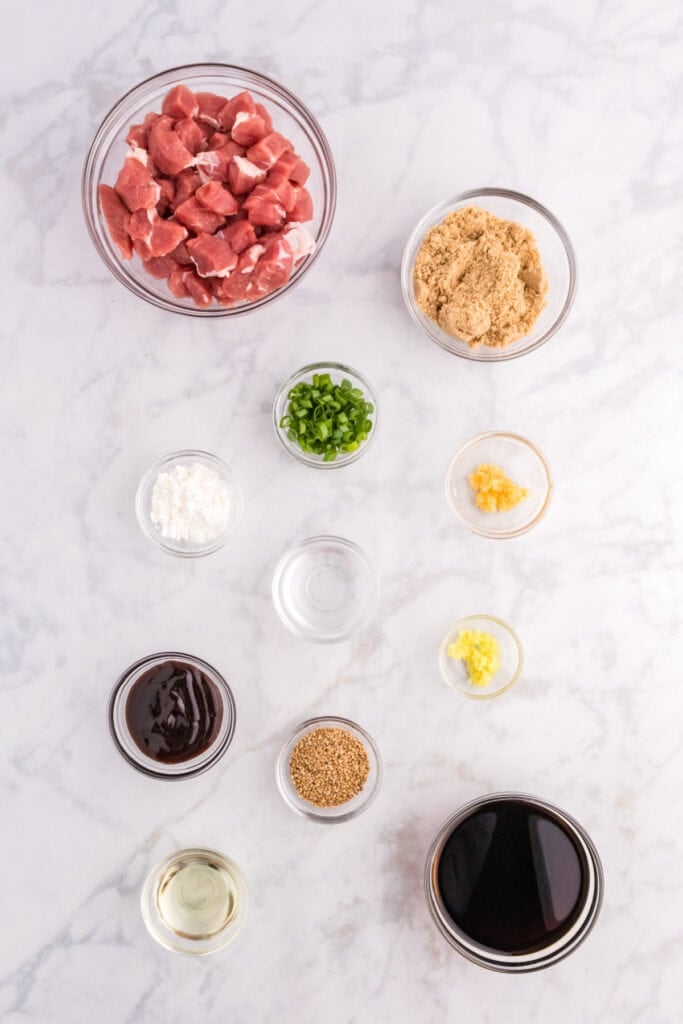
- Key Ingredients
- Ingredients & Substitutions
- Variations
- Tips for Best Results
- FAQs
- How to Store, Freeze & Reheat Mongolian Pork
- How to Make Mongolian Pork
- Make Ahead Instructions
- What to Serve with Mongolian Pork
- If You Enjoyed Mongolian Pork
- 📌 Save This Recipe
- Mongolian Pork Recipe
- 🍽️ Other Recipes You May Enjoy
❤️ Why You’ll Love This Recipe
- Better than takeout with simple pantry ingredients.
- Ready in less than one hour.
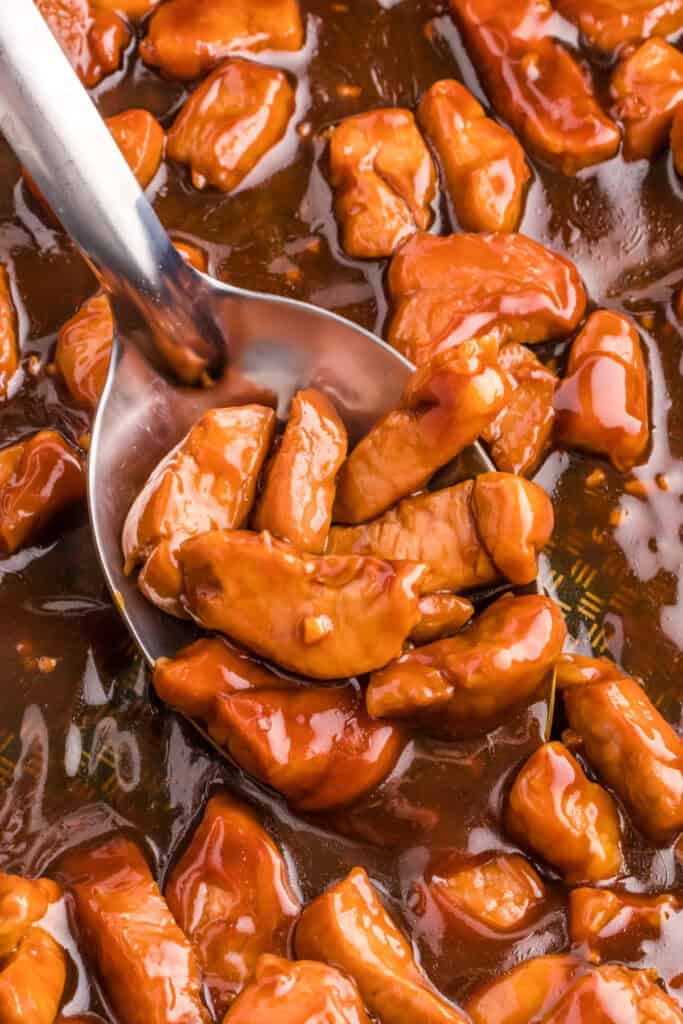
- Tender, juicy pork in a thick, glossy sauce.
- Perfect for busy weeknight dinners.
- Easy to customize with vegetables or extra spice.
- Great for meal prep because leftovers reheat beautifully.
What Is Mongolian Pork?
Despite the name, Mongolian Pork isn’t a traditional Mongolian dish. Like Mongolian Beef, it’s an American-Chinese restaurant favorite featuring thin slices of meat cooked quickly and coated in a sweet, savory sauce flavored with soy sauce, garlic, ginger, and brown sugar. This homemade version delivers the same bold flavors with ingredients you can easily find at the grocery store.
Why This Recipe Works
Marinating the pork first helps season the meat all the way through and tenderize it. Thickening the reserved marinade after cooking the pork creates a silky sauce that clings to every bite without becoming overly heavy.
Key Ingredients
NOTE: This section highlights ingredients used in the recipe. Find the full printable recipe in the recipe card below.
Pork tenderloin
Lean, tender, and cooks quickly. Slice it thinly across the grain for the most tender bites.
Low-sodium soy sauce
Using low-sodium soy sauce keeps the sauce flavorful without becoming overly salty.
Hoisin sauce
Adds sweetness, richness, and classic takeout flavor.
Brown sugar
Balances the salty soy sauce and helps create a glossy finish.
Fresh garlic and ginger
These fresh aromatics provide the signature flavor that makes Mongolian-style dishes so delicious.
Cornstarch slurry
A simple mixture of cornstarch and water thickens the sauce into the perfect consistency.
Ingredients & Substitutions
NOTE: This section suggests substitutions. Find the full printable recipe in the recipe card below.
- Pork tenderloin – Pork loin, boneless pork chops, chicken breast, chicken thighs, beef sirloin, flank steak, shrimp, or extra-firm tofu all work well.
- Low-sodium soy sauce – Highly recommended to prevent the sauce from becoming too salty. Gluten-free tamari may be substituted.
- Hoisin sauce – Adds sweetness and depth. Oyster sauce can be substituted for a slightly different flavor.
- Brown sugar – Light or dark brown sugar both work well. Honey may also be used.
- Garlic – Fresh garlic provides the best flavor, but jarred minced garlic works in a pinch.
- Fresh ginger – Fresh is strongly recommended. Ginger paste may also be used.
- Vegetable oil – Canola oil, avocado oil, or peanut oil are great alternatives.
- Cornstarch – Thickens the sauce. Arrowroot starch may be substituted.
- Green onions – Add freshness and color. Chives can be substituted if needed.
- Sesame seeds – Optional, but they add a nice finishing touch.
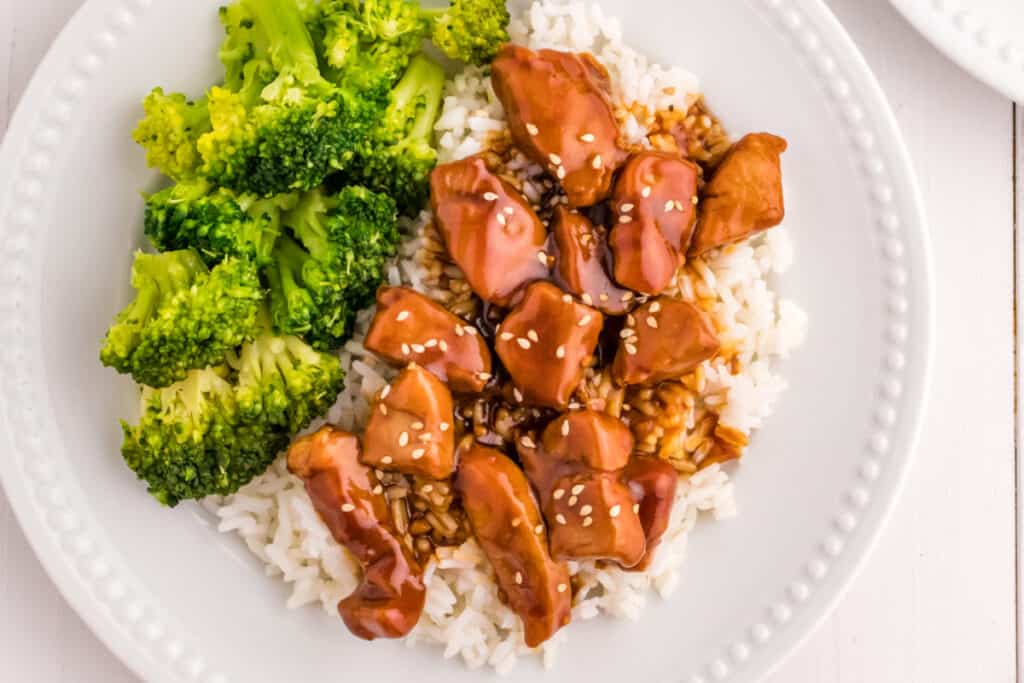
- Rice or noodles – Serve with steamed jasmine rice, brown rice, fried rice, lo mein, ramen, or rice noodles.
Variations
- Add vegetables: Stir in broccoli, bell peppers, mushrooms, carrots, snow peas, or onions.
- Make it spicy: Add crushed red pepper flakes, sriracha, chili garlic sauce, or sliced fresh chiles.
- Try another protein: Substitute thinly sliced chicken breast, chicken thighs, beef sirloin, flank steak, shrimp, or extra-firm tofu.
- Use noodles: Toss the finished pork with cooked lo mein, ramen, or rice noodles instead of serving over rice.
Tips for Best Results
- Slice the pork into even, bite-sized pieces so it cooks evenly.
- Freeze the pork for about 20 minutes before slicing for cleaner cuts.
- Cook over medium-high heat for the best browning.
- Don’t overcrowd the pan. Cook in batches if needed.
- Always use low-sodium soy sauce for the best flavor balance.
- Simmer the sauce only until thickened. Overcooking can make it too thick.
- Garnish just before serving for the freshest flavor and texture.
FAQs
Yes. Pork loin works well, but slice it very thinly across the grain since it’s slightly less tender than tenderloin.
Yes. You can marinate the pork ahead of time and refrigerate it for up to 2 hours before cooking.
You can, but the finished sauce will be much saltier. If using regular soy sauce, consider reducing the amount slightly or adding a little extra brown sugar.
Yes. Use gluten-free soy sauce (tamari) and gluten-free hoisin sauce.
Broccoli, carrots, mushrooms, onions, snow peas, bell peppers, bok choy, and snap peas are all excellent additions.
Absolutely. Brown the pork in batches so it sears instead of steaming.
No. It’s sweet and savory. Add red pepper flakes or chili sauce if you’d like some heat.
How to Store, Freeze & Reheat Mongolian Pork
Storage
Store cooled leftovers in an airtight container in the refrigerator for up to 4 days.
Freezing
Freeze cooled Mongolian Pork in a freezer-safe container for up to 2 months. Thaw overnight in the refrigerator before reheating.
Reheating
Reheat gently in a skillet over medium-low heat with a splash of water if needed to loosen the sauce. You can also microwave individual portions in 30-second intervals until heated through.
Would you like to save this?
How to Make Mongolian Pork
NOTE: This section includes a step-by-step guide. Find the full printable recipe in the recipe card below.
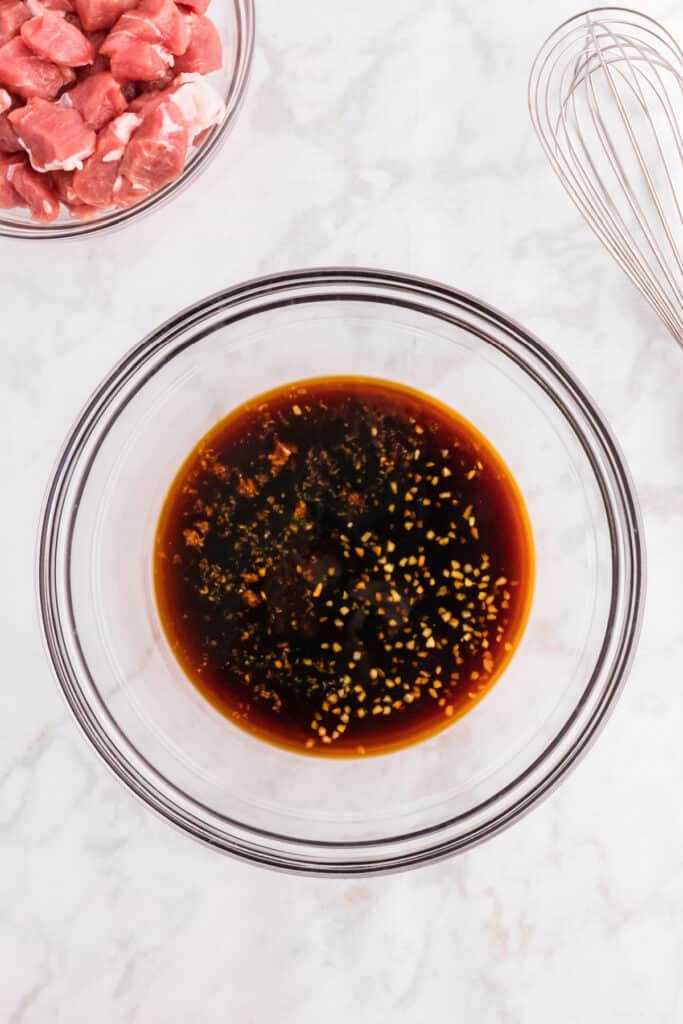
- Whisk together the soy sauce, hoisin sauce, brown sugar, garlic, and ginger.
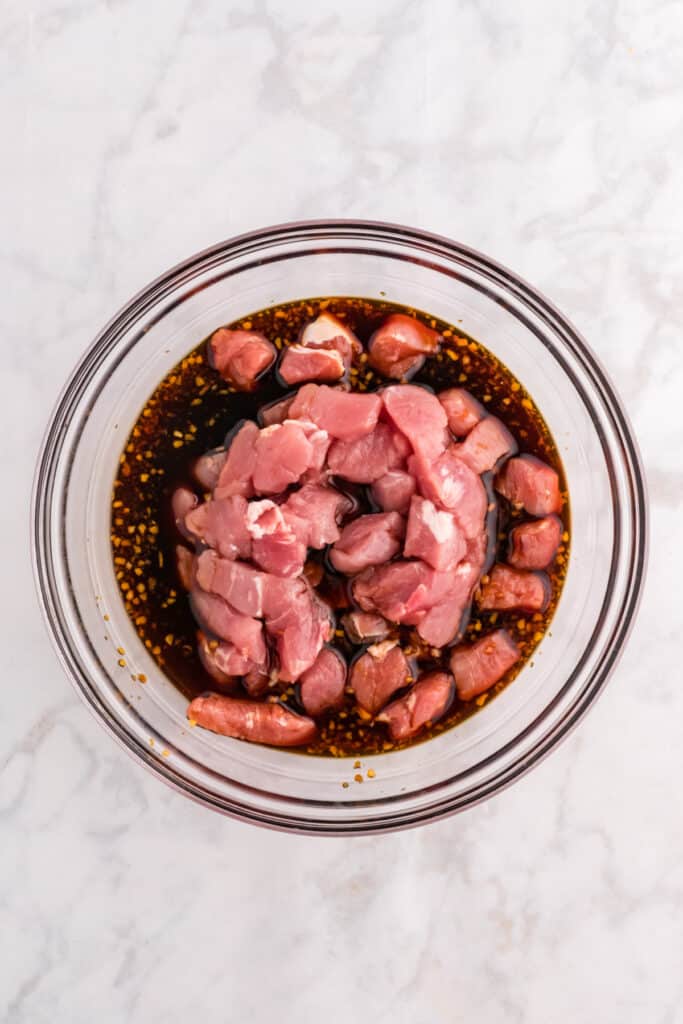
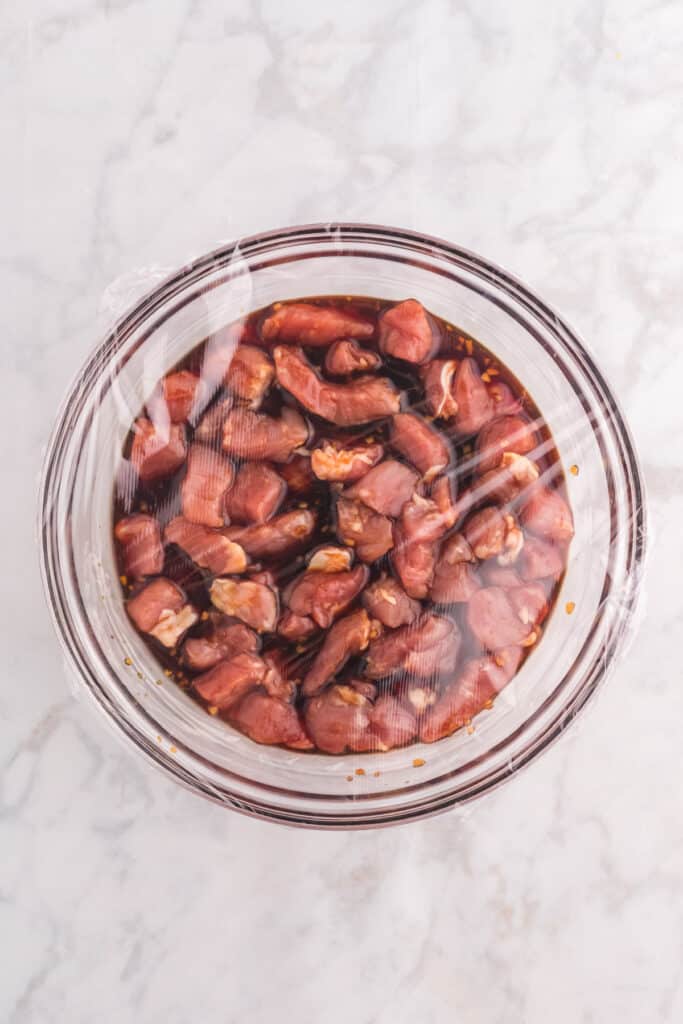
- Marinate the sliced pork for at least 20 minutes.
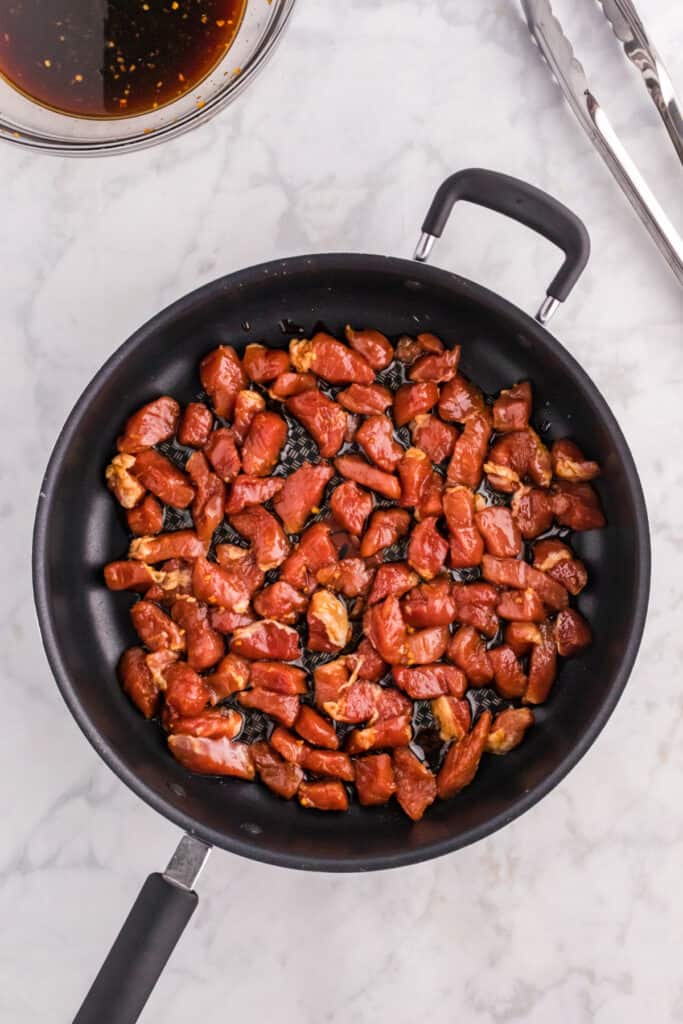
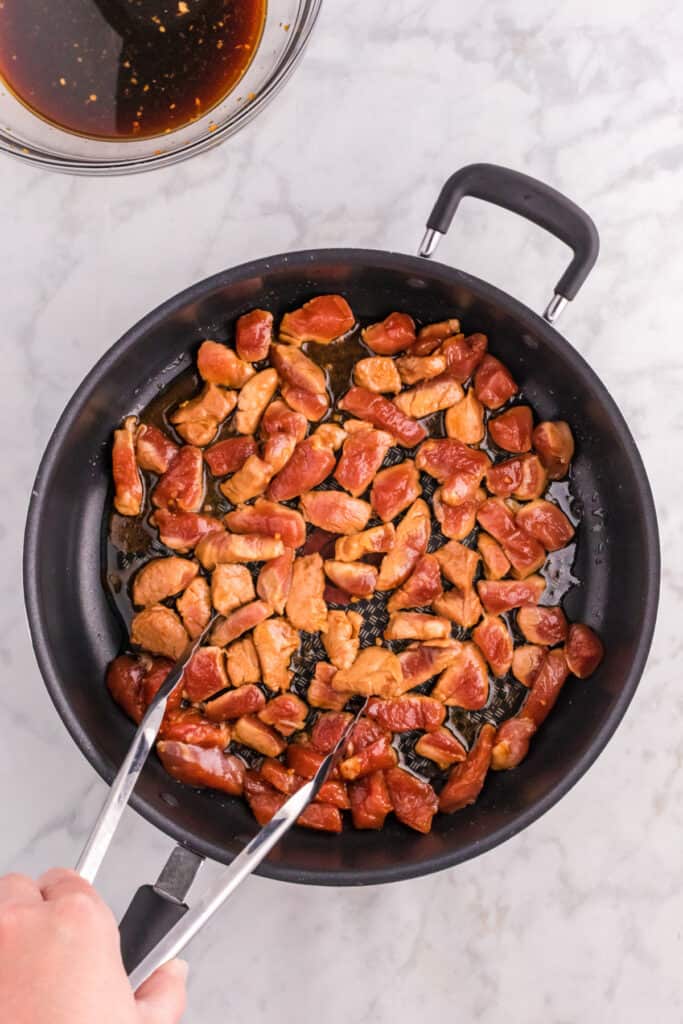
- Brown the pork in a hot skillet or wok.
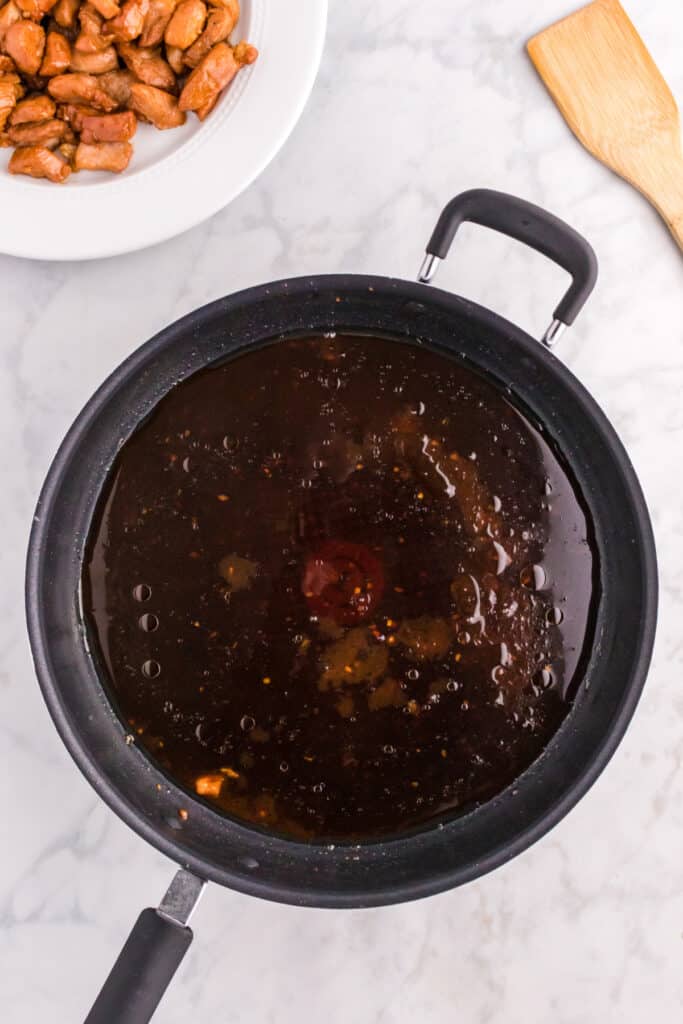
- Simmer the reserved marinade.
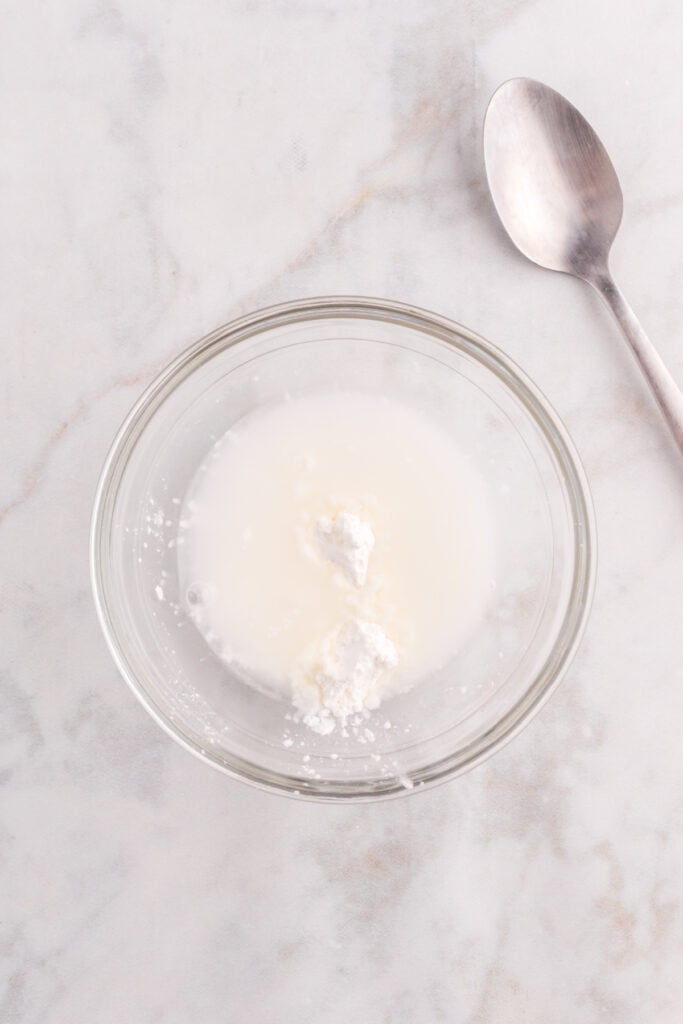
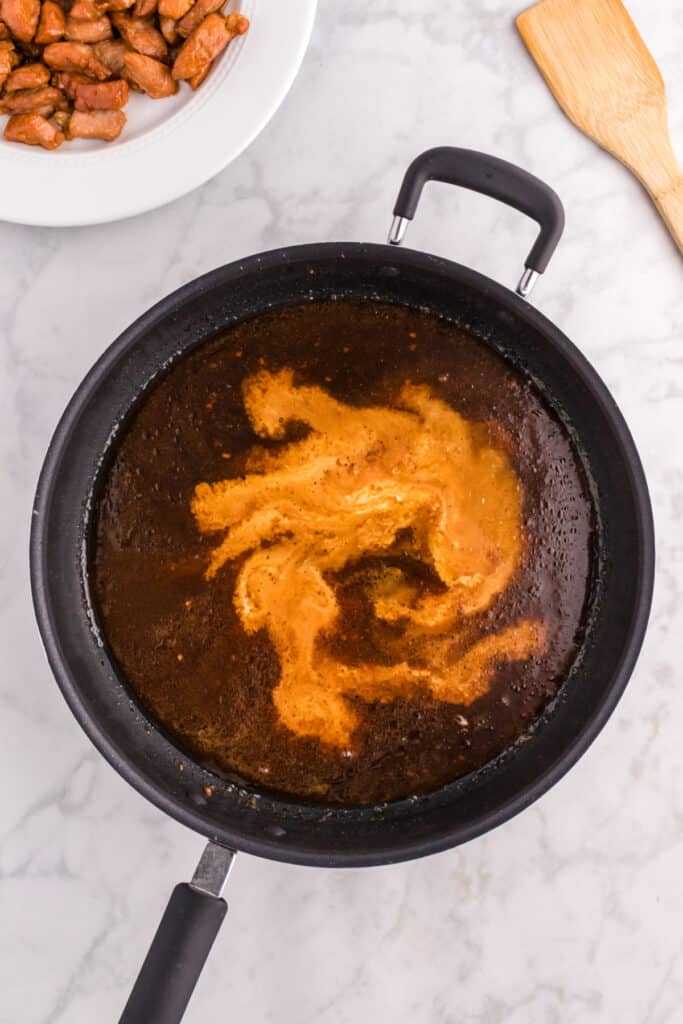
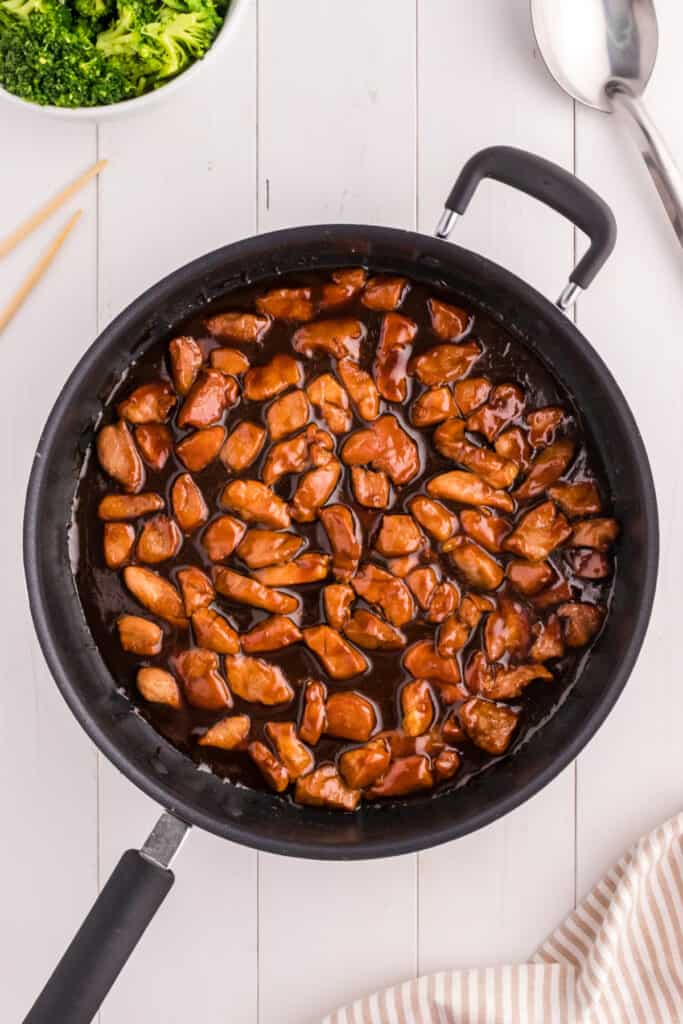
- Stir in the cornstarch slurry until the sauce thickens.
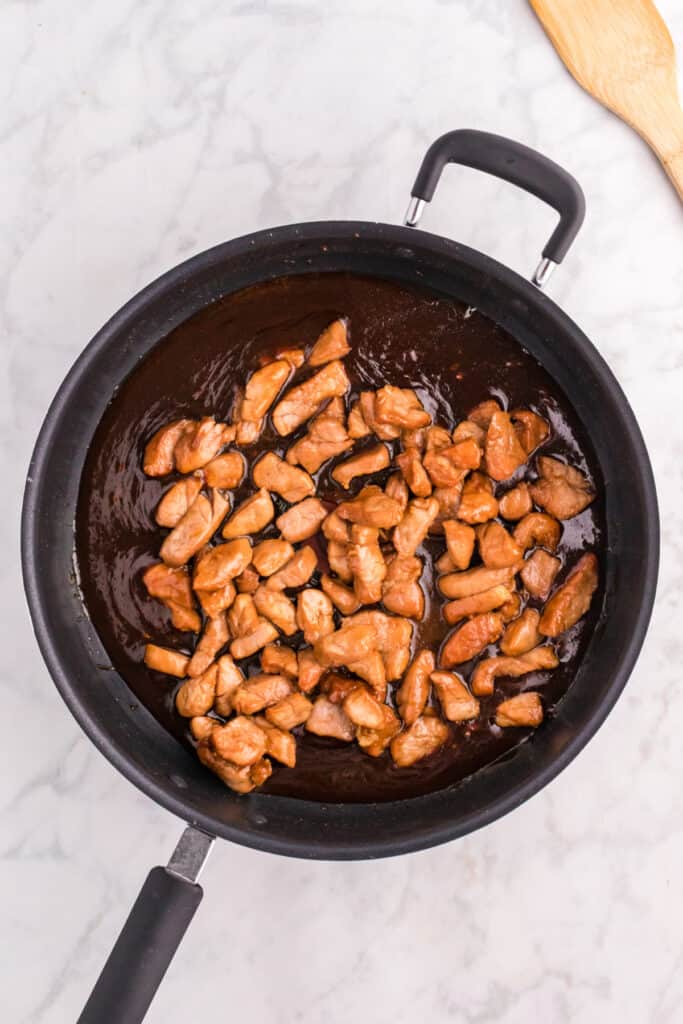
- Return the pork to the pan and coat it with the sauce.
- Finish with sliced green onions and sesame seeds before serving over rice or noodles.

Make Ahead Instructions
The pork can be marinated up to 2 hours ahead of cooking. You can also prepare the sauce ingredients earlier in the day and refrigerate it until ready to use.
Leftovers make an excellent meal prep lunch and reheat well.
What to Serve with Mongolian Pork
This recipe pairs well with:
- Steamed jasmine rice
- Fried rice
- Lo mein noodles
- Garlic noodles
- Stir-fried broccoli
- Bok choy
- Sugar snap peas
- Asian cucumber salad
- Egg rolls
- Crab Rangoon
If You Enjoyed Mongolian Pork
If you loved this Mongolian Pork, then you already know how irresistible that sweet-and-savory soy-ginger sauce is – and good news, there are plenty more recipes on the blog with that same bold, takeout-style appeal.
My Hibachi Chicken is a great next stop. It comes together quickly in a hot skillet with a buttery soy-garlic sauce, and it has the same satisfying depth of flavor you get at your favorite Japanese steakhouse. If you’re more of a seafood fan, Hibachi Shrimp delivers all the same bold hibachi flavor in about 15 minutes – perfect for a quick weeknight dinner.
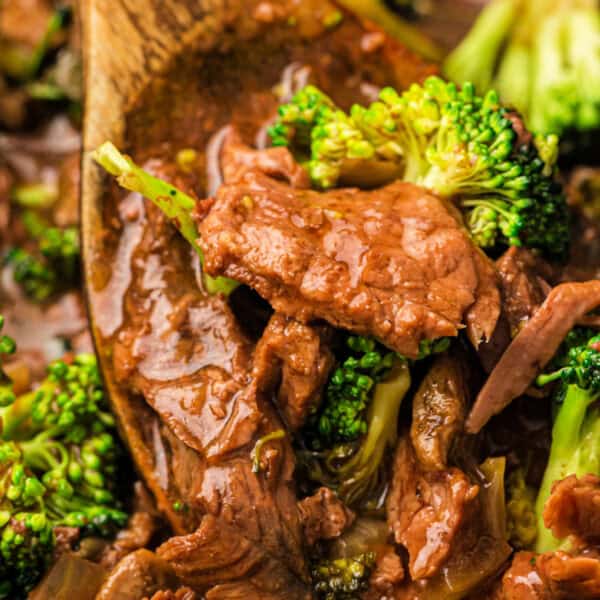
For something sweeter, Chicken Teriyaki is a must-try. The homemade teriyaki sauce is so much better than anything from a bottle, and it pairs beautifully with steamed rice and roasted broccoli. And if you want a beef option with that same sweet-savory soy profile, Easy Korean Beef Bulgogi is absolutely worth adding to your dinner rotation. Tender marinated beef, served over rice with fresh toppings – it’s a total crowd-pleaser.
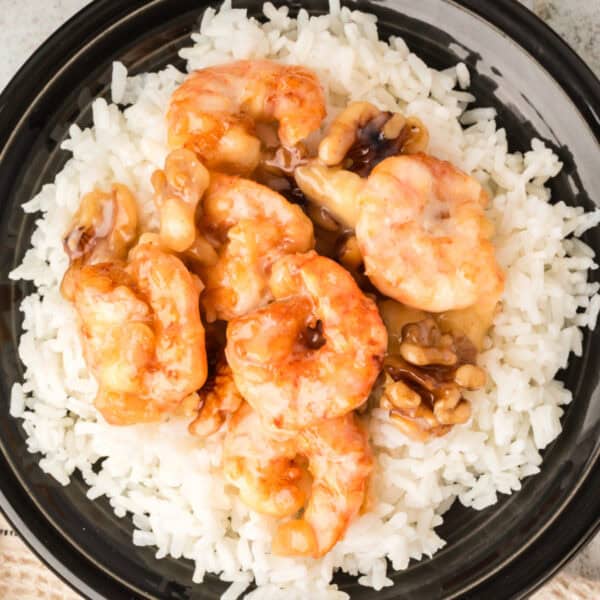
Two more you won’t want to sleep on: Sticky Asian Glazed Meatballs are coated in a quick pantry-ingredient sauce that the whole family goes crazy for, and Honey Garlic Pork Tenderloin is a one-skillet pork dinner with a rich, caramelized glaze that’s every bit as satisfying.
And when you need a side dish that fits right in with all of these Asian-inspired flavors, Peanut Butter Ramen Noodles come together in just 10 minutes with a creamy, savory sauce made from simple pantry staples.
📌 Save This Recipe
Don’t lose this easy dinner! Save or pin this Mongolian Pork recipe to your favorite Pinterest board so you can find it whenever you’re craving takeout at home.
Pin this now to find it later
Pin It

Mongolian Pork
Would you like to save this?
Equipment
- mixing bowl (large and small)
- large skillet or wok
Ingredients
- 1 cup low-sodium soy sauce
- ½ cup hoisin sauce
- ½ cup light brown sugar, packed
- 2 teaspoons minced garlic
- 1 tablespoon freshly grated ginger, about a 1-inch piece
- 1½ pounds pork tenderloin, sliced into bite-sized pieces
- 2 tablespoons vegetable oil
- 2 tablespoons cornstarch
- 3 tablespoons water
- 2 green onions, sliced, plus more for garnish
- Steamed rice or cooked noodles, for serving
- Sesame seeds, for garnish
Instructions
- In a large bowl, whisk together the soy sauce, hoisin sauce, brown sugar, garlic, and ginger until the brown sugar has dissolved.1 cup low-sodium soy sauce, ½ cup hoisin sauce, ½ cup light brown sugar, 2 teaspoons minced garlic, 1 tablespoon freshly grated ginger
- Add the sliced pork and toss to coat well. Marinate for at least 20 minutes or refrigerate for up to 2 hours for even more flavor.1½ pounds pork tenderloin
- Heat the vegetable oil in a large skillet or wok over medium-high heat.2 tablespoons vegetable oil
- Remove the pork from the marinade, letting the excess drip back into the bowl. Reserve the marinade.
- Working in batches if necessary, cook the pork for 3 to 4 minutes per side, or until browned and cooked through. Transfer the cooked pork to a plate.
- Carefully pour the reserved marinade into the same skillet and bring it to a gentle simmer.
- In a small bowl, whisk together the cornstarch and water until smooth. Slowly whisk the slurry into the simmering sauce.2 tablespoons cornstarch, 3 tablespoons water
- Cook for 1 to 2 minutes, stirring constantly, until the sauce thickens and becomes glossy.
- Return the cooked pork to the skillet and toss until every piece is evenly coated. Cook for 2 to 3 minutes to heat everything through.
- Stir in the sliced green onions.2 green onions
- Serve immediately over steamed rice or noodles. Garnish with sesame seeds and additional green onions, if desired.Steamed rice or cooked noodles, Sesame seeds
Notes
🥡 STORAGE
- Store leftovers in an airtight container in the refrigerator for up to 4 days.
♨️ REHEATING
- Reheat in a skillet over medium-low heat with a splash of water if needed to loosen the sauce.
- Microwave individual portions in 30-second intervals until hot.
❄️ FREEZING
- Freeze cooled Mongolian Pork in a freezer-safe container for up to 2 months.
- Thaw overnight in the refrigerator before reheating.
💡 TIPS FOR BEST RESULTS
- Slice the pork thinly across the grain for the most tender bites.
- Freeze the pork for about 20 minutes before slicing to make it easier to cut.
- Cook the pork in batches, so it browns rather than steams.
- Use low-sodium soy sauce for the best balance of flavor.
- Stir the cornstarch slurry again just before adding it to the sauce.
- Garnish just before serving for the freshest flavor.
🍳 ALTERNATE COOKING METHODS
Air Fryer: Cook the marinated pork at 400°F for 8 to 10 minutes, shaking halfway through. Prepare the sauce on the stovetop, then toss it with the cooked pork before serving. Blackstone or Flat Top Grill: Cook the pork over medium-high heat until browned and cooked through. Make the sauce separately in a saucepan, then combine before serving.♻️ LEFTOVERS
- Turn leftovers into lettuce wraps.
- Add them to fried rice.
- Toss with lo mein noodles.
- Stuff into Asian-style tacos or wraps.
- Serve over cauliflower rice for a lighter meal.
📝 NOTES
- For extra flavor, marinate the pork for the full 2 hours.
- Add broccoli, mushrooms, bell peppers, carrots, or snap peas during the last few minutes of cooking for a complete one-pan meal.
- For a spicy version, stir in chili garlic sauce, sriracha, or crushed red pepper flakes.
- The sauce will continue to thicken slightly as it cools.
- Food safety tip: Because the marinade comes into contact with raw pork, it must be brought to a full simmer before using it as the finished sauce.
Nutrition
Nutrition information is automatically calculated, so should only be used as an approximation.
🍽️ Other Recipes You May Enjoy
If you enjoyed this recipe, here are a few more reader-favorite recipes from Love Bakes Good Cakes you may want to try next.